When Samsung launched the Galaxy S26 Ultra earlier this year, it set the benchmark for every other contender gunning to be the best phone around. Now that the iPhone 18 Pro Max is finally here, Apple has a lot to prove to dethrone its rival.
That’s why I’m exploring one of the most heated matchups in tech right now: an iPhone 18 Pro Max vs. Galaxy S26 Ultra face-off. Samsung certainly didn’t disappoint, as the S26 Ultra introduced an innovative Privacy Display, more helpful agentic AI features, and major camera hardware overhauls.
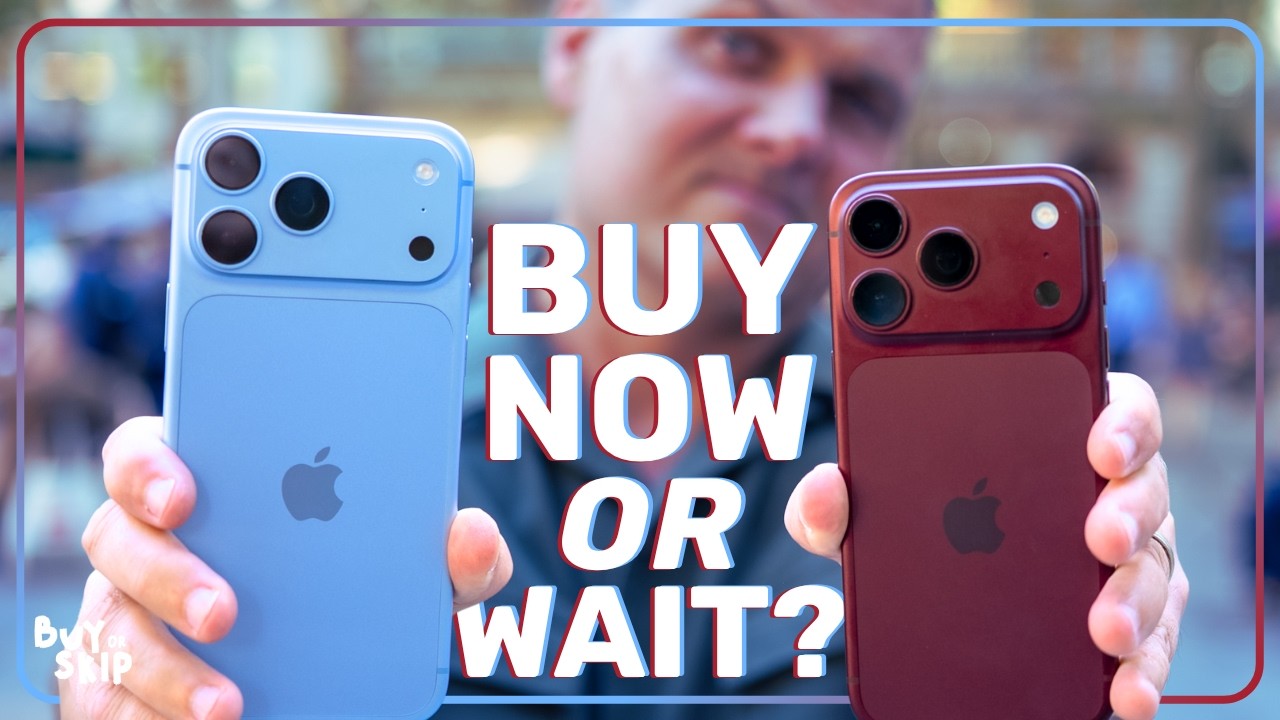
Apple didn't just deliver incremental tweaks this time around, either. With the blazing A20 Pro chip under the hood, a mechanical variable aperture camera system, and deeper Apple Intelligence integration, the iPhone 18 Pro Max lands late in the release cycle with serious firepower aimed directly at Samsung’s crown.
After putting both phones through rigorous testing, only one emerges as the clear recommendation.
iPhone 18 Pro Max vs Galaxy S26 Ultra: Specifications
| Header Cell - Column 0 | iPhone 18 Pro Max |
Galaxy S26 Ultra |
|---|---|---|
Price |
From $1,299 |
From $1,299 |
Main Display |
6.9-inch Super Retina XDR display (2,868 x 1,320) |
6.9-inch Dynamic AMOLED 2X (3,120 x 1,440) |
Refresh Rate |
1-120Hz ProMotion |
1-120Hz adaptive |
Processor |
A20 Pro |
Snapdragon 8 Elite Gen 5 for Galaxy |
Storage |
256GB, 512GB, 1TB, 2TB |
256GB, 512GB, 1TB |
RAM |
12GB |
12GB / 16GB |
Front Camera |
18MP Center Stage camera (f/1.9) |
12MP (f/2.2) |
Rear Cameras |
48MP main with variable aperture (f/1.48, f/1.8, f/2.8, f/4), 48MP ultrawide (f/2.2), 48MP telephoto w/4x optical zoom (f/2.8) |
200MP main (f/1.4), 50MP ultrawide (f/1.9), 10MP 3x telephoto (f/2.4), 50MP 5x telephoto (f/2.9) |
Battery Capacity |
5,391 mAh |
5,000 mAh |
Charging |
60W wires, 35W wireless |
60W wired, 25W wireless |
Size |
6.43 x 3.07 x 0.34 inches (163.4 x 78.0 x 8.75 mm) |
6.44 x 3.07 x 0.31 inches (163.6 x 78.0 x 7.9 mm) |
Weight |
8.78 ounces (249 grams) |
7.55 ounces (214 grams) |
IP Rating |
IP68 |
IP68 |
Colors |
Black, Silver, Glacier, Burgundy |
Black, White, Sky Blue, Cobalt Violet, Silver Shadow, Pink Gold |
iPhone 18 Pro Max vs. Galaxy S26 Ultra: Price and release

Samsung’s flagship is no longer more expensive than Apple’s. That’s because the iPhone 18 Pro Max received a $100 price hike that brings its starting price to $1,299, matching the Galaxy S26 Ultra dollar for dollar out of the gate.
Samsung kicked off the year by releasing the S26 Ultra on March 11, which by now can be had with significant discounts through carrier promos. Meanwhile, the iPhone 18 Pro Max launched later on September 18 with its own introductory offers and incentives.
Considering that both flagships demand the exact same initial investment for their entry-level storage, neither handset manages to undercut the other at checkout.
Winner: tie
iPhone 18 Pro Max vs. Galaxy S26 Ultra: Design

Predictably, both flagships showcase exceptional build quality — but they take drastically different approaches to aesthetics and in-hand feel.
I still prefer the iPhone 18 Pro Max's noticeably more refined look, highlighted by how its gently contoured edges soften the aluminum unibody frame. However, picking up the two side-by-side reveals a stark physical contrast. Despite sharing a nearly identical footprint, the iPhone 18 Pro Max feels significantly denser, tipping the scales at 8.78 ounces. As much as I love how that extra heft gives it a rock-solid build, I don’t like that it’s the heaviest iPhone to date.
On the other side, Samsung plays it far safer with the Galaxy S26 Ultra. Its boxy industrial look borders on boring for my taste, as it simply doesn't turn heads the way a top-tier flagship should. That said, Samsung deserves immense credit for making it feel lighter in hand while still carving out dedicated housing for the embedded S Pen — delivering built-in utility Apple still can't match.
Ultimately, while the S Pen remains a killer productivity perk, the iPhone’s premium finish, contoured ergonomic touches, and superb craftsmanship make it the more stunning piece of hardware.
Winner: iPhone 18 Pro Max
iPhone 18 Pro Max vs. Galaxy S26 Ultra: Display

In my years of reviewing phones, one general rule I go by is that a brighter display is typically superior — but I’m reluctant to adhere to that here. Impressively, the iPhone 18 Pro Max doesn’t disappoint, pushing out 2,396 nits of peak brightness from its 6.9-inch Super Retina XDR panel. Paired with a buttery smooth 120Hz refresh rate and an upgraded anti-reflective coating that deflects glare better than before, it handles virtually any viewing condition with ease.
That brightness matters outdoors in the harsh mid-afternoon sun. Most phones struggle under direct sunlight, but not this one. In fact, Apple’s panel punches through glare with noticeably more power than Samsung’s.
| Header Cell - Column 0 | iPhone 18 Pro Max |
Galaxy S26 Ultra |
|---|---|---|
Peak Brightness (nits) |
2,326 nits |
1,806 nits |
Delta-E |
0.26 |
0.22 / 0.29 (Natural / Vivid) |
sRGB |
115.4% |
127.9% / 151% (Natural / Vivid) |
DCI-P3 |
81.8% |
90.6% / 106.9% (Natural / Vivid) |
Yet, despite Apple’s brightness advantage, Samsung pulls off the far more meaningful breakthrough with its Privacy Display. Instead of forcing you to rely on third-party screen protectors, Samsung natively integrates the technology into the OLED panel — shielding the screen from prying eyes from all sides. When you ride the train or subway as much as I do, you quickly appreciate how big a difference this makes.
Apple gives you pure brightness, but Samsung delivers genuine hardware innovation that solves an everyday headache. I'll trade extra nits for real privacy any day.
Winner: Galaxy S26 Ultra
iPhone 18 Pro Max vs. Galaxy S26 Ultra: Cameras

I’m always most interested in camera performance, seeing that it’s the biggest deciding factor whenever I buy a phone. The iPhone 18 Pro Max comes to the table with a 48MP main camera featuring a mechanical variable aperture (f/1.48, f/1.8, f/2.8, f/4.0), a 48MP ultrawide, and a 48MP telephoto with 4x optical zoom. Around the front, Apple equips it with an 18MP Center Stage camera.
Meanwhile, the Galaxy S26 Ultra packs a quad-camera system led by a massive 200MP main sensor, a 50MP ultrawide, a 10MP telephoto with 3x optical zoom, and a 50MP periscope telephoto with 5x optical zoom — backed by a 12MP selfie camera.
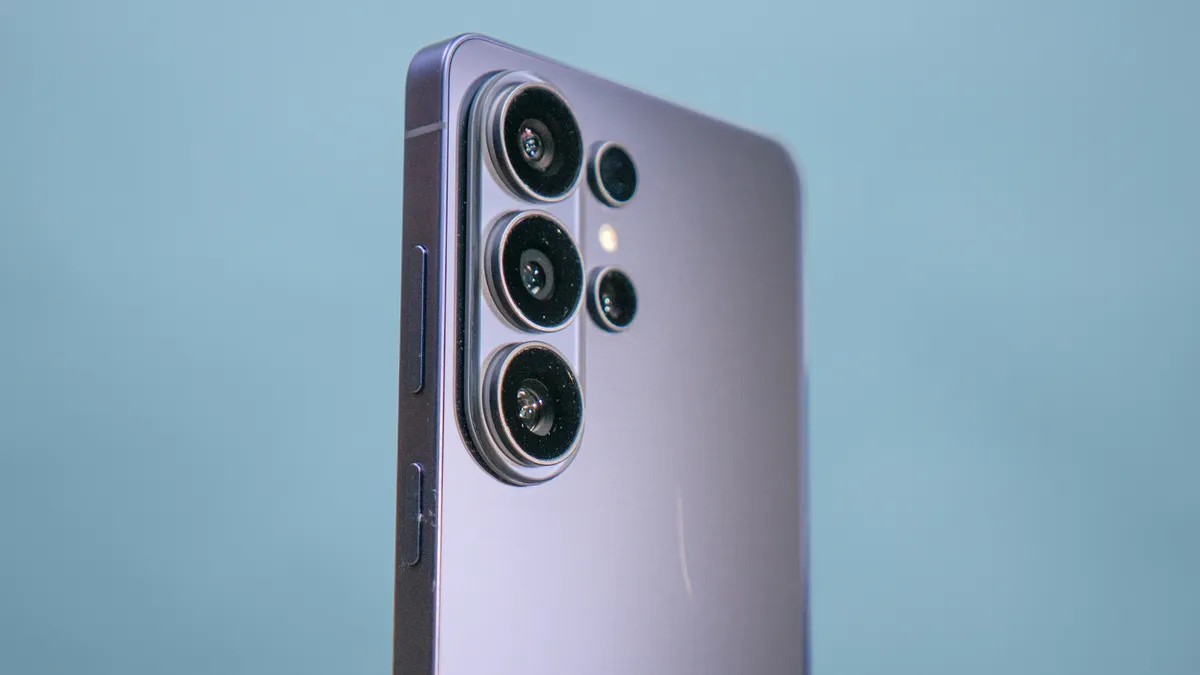
For years, Samsung held an uncontested edge over Apple when it came to granular creative control, largely thanks to its Pro modes, Expert RAW app, and specialized shooting tools. However, Apple has finally closed that gap with Pro Controls. This new addition lets me manually dial in shutter speed, white balance, focus, and crucially, physical aperture.

That mechanical variable aperture is a game changer. Instead of simulating depth with computational portrait mode blur, the physical aperture blades can open wide to f/1.48 to flood the sensor with light, or stop down to f/4.0 to pull an entire landscape into tack-sharp focus.
Samsung counters with clever tricks of its own. Its camera app features Horizon Lock, which keeps video level on the horizontal axis no matter how much the phone tilts or shakes during capture. Furthermore, Samsung's dedicated 5x periscope lens simply pulls in more optical reach than Apple's 4x telephoto.


I’ll cut straight to the chase and focus on their low-light performance, as it’s the area that separates a good camera from an excellent one. The iPhone 18 Pro Max’s wider f/1.48 aperture proves its worth, producing a sharper image of the flag under dim conditions. By contrast, the Galaxy S26 Ultra struggles to retain edge clarity and yields a noticeably softer shot.


The results are a smidge closer indoors with ambient artificial lighting, as both do a decent job at exposing the scene including the shadows. I do like how the iPhone captures the tiny fairy-light points reflecting inside glass and shiny surfaces.
There are notable differences between their ultrawide lenses, with each phone delivering its own distinct look. What immediately grabs my attention is how the iPhone 18 Pro Max produces a more balanced dynamic range, pulling cleaner contrast and richer detail from the clouds without washing out the blue sky.
Again, the iPhone 18 Pro Max immediately jumps out with the way it handles portraits. It manages the intense direct sunlight far better, preserving skin tones and natural warmth across Mark's face. By contrast, the exposure runs darker with the Galaxy S26 Ultra, casting a dull shadow and tilting the color temperature toward a cooler tone.
The photographer in me knows the advantage of a longer optical zoom. Yet, these images captured at 10x tell an interesting story, because despite the Galaxy S26 Ultra's 5x optical reach, fine detail and definition remain remarkably similar across the face of the pumpkin decor.
Moving up to 40x zoom, the Galaxy S26 Ultra’s extra reach and image processing render the tiny words underneath the "Happy Hour" sign better, despite smoothing out surrounding textures. In fact, I can actually read the specific days and times on the sign far more easily.


Video recording performance remains remarkably close between the two, as is evident in the clips above captured at 4K 30fps. While the iPhone pulls sharper details from the rocks around the koi pond and offers a more fluid zooming motion, the Galaxy S26 Ultra’s 5x telephoto lens proves its worth by capturing distant subjects with greater clarity.
Because the iPhone delivers a cleaner low-light performance, more natural dynamic range and color science, true mechanical aperture control, and matched manual settings, it takes the victory over the S26 Ultra's extra zoom reach.
Winner: iPhone 18 Pro Max
iPhone 18 Pro Max vs. Galaxy S26 Ultra: Performance

When it comes to pure muscle power, Apple proves that the A20 Pro inside the iPhone 18 Pro Max is an absolute powerhouse — showing up the Snapdragon 8 Elite Gen 5 for Galaxy in more ways than one.
For example, Geekbench 6 scores reveal how the A20 Pro widens the gap with single- and multi-core tallies of 4,741 and 12,789, respectively. Clearly, those beat out the 3,785 and 11,563 scores put up by the Galaxy S26 Ultra, but Apple's lead doesn't stop there.

Graphics and gaming benchmarks tell a similar story. In 3DMark’s Solar Bay Unlimited test, both handsets deliver blistering frame rates, but the iPhone 18 Pro Max's 67.9 fps average frame rate and 17,850 score easily blow past its rival's 49.37 fps and 12,984 mark.
| Row 0 - Cell 0 | Geekbench 6 (single/multi-core) |
Geekbench 7 |
3DMark Solar Bay Unlimited |
Geekbench AI 1.7 |
iPhone 18 Pro |
4,735 / 12,800 |
4,022 / 11,543 |
61.93 fps / 16,288 |
69245 (Quantitized Core ML/Neural Engine) |
iPhone 18 Pro Max |
4,741 / 12,789 |
4,025 / 11,525 |
67.9 fps/17,850 |
71974 |
Galaxy S26 Ultra |
3,785 / 11,563 |
3,149 / 10,612 |
49.37 fps / 12,984 |
83047 (TensorFlow Lite QNN) |
iPhone 17 Pro |
3,834/ 9,988 |
3,138 / 8,692 |
46.4 fps / 12,208 |
49,050 |
iPhone 17 Pro Max |
3,871 / 9,968 |
3,285 / 8,999 |
46.6 fps / 12,260 |
48549 |
While the A20 Pro excels in raw computation and graphics, dedicated on-device neural processing flips the script. The Galaxy S26 Ultra posts a massive score of 83,047 running TensorFlow Lite QNN in Geekbench AI 1.7. That comfortably outpaces the iPhone 18 Pro Max's score of 71,974, proving that Qualcomm’s silicon still has the upper hand when processing complex machine learning tasks.
Winner: iPhone 18 Pro Max
iPhone 18 Pro Max vs. Galaxy S26 Ultra: Battery Life and Charging

Apple never shares official battery capacities with its iPhones, but it doesn’t have to based on the endurance it puts out with our battery drain test. The iPhone 18 Pro Max outlasts the Galaxy S26 Ultra by running nearly 18.5 hours before it’s zapped — versus the S26 Ultra’s average of 16 hours and 40 minutes. For heavy power users, streamers, and commuters who go long between charges, the iPhone 18 Pro Max gives you that extra cushion to cover the gap.
| Row 0 - Cell 0 | Hrs:Mins |
iPhone 18 Pro Max |
18:27 |
Galaxy S26 Ultra |
16:40 |
Both phones offer 60W wired charging, which is plenty fast to add a decent amount of charge with short bursts. Yet, the iPhone 18 Pro Max gets to 80% in 30 minutes, which is better than the 77% pulled in by the S26 Ultra.
Winner: iPhone 18 Pro Max
iPhone 18 Pro Max vs. Galaxy S26 Ultra: Software and AI Features

Fundamentally, I think most people will appreciate the underlying software powering both phones: iOS 27 for the iPhone and One UI 9 on top of Android 17. There’s plenty of customization offered by both, but I really dig the aesthetic of Liquid Glass on the iPhone 18 Pro Max.
With the release of iOS 27, Apple is making up considerable ground with new AI tools that rival features long available on the Galaxy S26 Ultra. Tools like Reframe and an improved Photo Clean Up highlight how Apple has refined its generative AI capabilities, while handy additions like generating passes directly in the Wallet app provide genuine daily utility.
However, it’s the introduction of Siri AI that catapults the iPhone 18 Pro Max forward in a big way — evolving far beyond a static voice assistant. Quite frankly, Siri AI’s grasp of on-screen context makes everyday interactions remarkably proactive. For example, when someone messages me an appointment time or address, the system immediately surfaces relevant in-app actions. I’ve also tested Siri AI with the new CarPlay, where it breezily handles multi-step voice tasks like jotting down detailed notes while I drive.
Yet, despite those advances, I still prefer Samsung’s approach on the Galaxy S26 Ultra with Gemini Live and Galaxy AI. As much as Siri AI has matured, Gemini remains the benchmark to beat on a smartphone. Not only does it seamlessly execute multi-step automations — like ordering Dunkin' for me through DoorDash — but tapping into its multimodal camera features unlocks an entirely new level of utility.
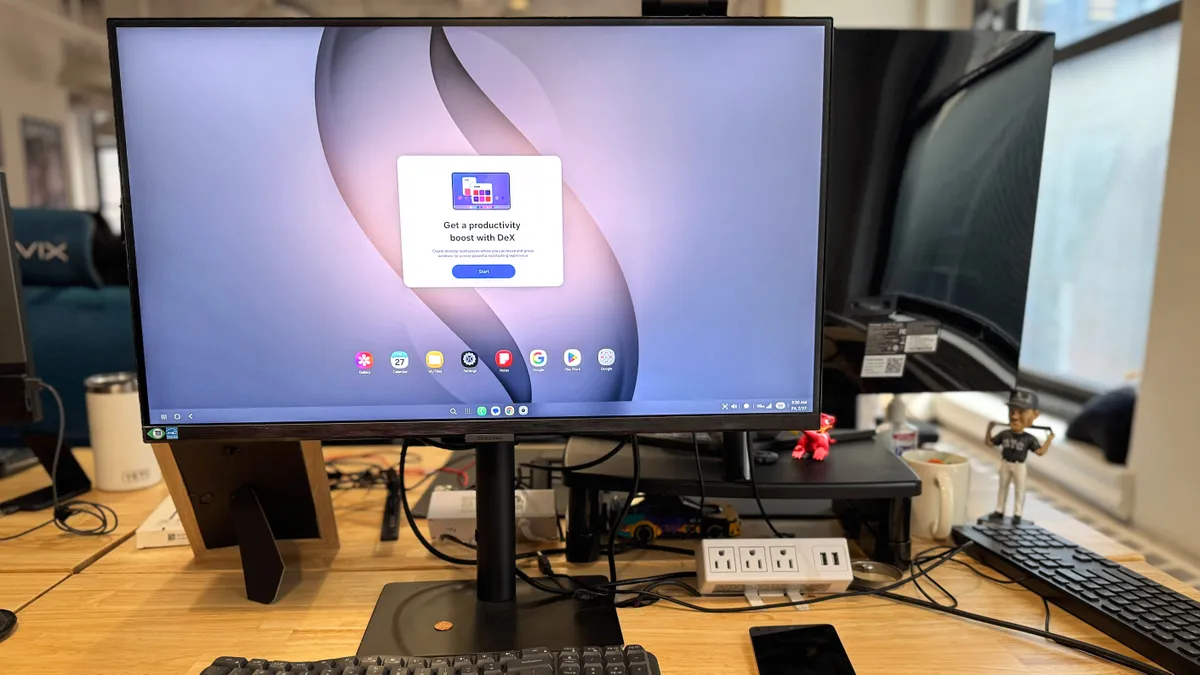
Beyond machine learning, Samsung’s software includes a powerhouse productivity tool Apple simply refuses to match: Samsung DeX. Plugging the S26 Ultra into an external monitor or a pair of smart glasses instantly transforms the handset into a full-blown desktop workspace with true multi-window multitasking.
Winner: Galaxy S26 Ultra
iPhone 18 Pro Max vs. Galaxy S26 Ultra: Verdict

This iPhone 18 Pro Max vs. Galaxy S26 Ultra face-off has a clear winner, as Apple’s flagship takes more categories overall. While I’ve seen narrower finishes with previous generations, Apple’s $100 price increase levels the playing field, making both phones an identical $1,299 investment for their 256GB base configurations.
Samsung certainly deserves credit for packing more robust AI features and comprehensive software that makes it feel like I have a computer in my pocket. Gemini’s deep integration is a big part of that, especially with how seamlessly it handles complex, multi-step automations. The Galaxy S26 Ultra also earns high marks for unique perks like the built-in S Pen and Privacy Display.
However, Apple clinches the overall crown by delivering decisive victories across the area that matter most in daily use. The A20 Pro sets a blistering standard for computational and graphical power, while the two-hour battery life gap it holds over its rival means you won’t have to worry about running short between charges. Throw in its mechanical variable aperture, superior low-light camera performance, and an overhaul with Siri AI, and the iPhone 18 Pro Max stands as the most refined and dependable flagship phone you can buy.
Follow Tom's Guide on Google News and add us as a preferred source to get our up-to-date news, analysis, and reviews in your feeds. Make sure to click the Follow button!
More from Tom's Guide